
Ariela Parisi's Cronoscopia platform seeks submissions for collaboration

Cronoscopia: A Digital Observatory of Latin American Futures
During her time as a Ph.D. candidate at Rutgers University, Ariela Parisi was awarded the Digital Humanities Seed Grant from the Rutgers Digital Humanities Initiative. With this grant, she developed Cronoscopia, a digital platform that explores the intersections of memory, speculation, and future imaginaries in Latin America. The platform serves as a space for critical engagement with speculative aesthetics, environmental justice, and alternative world-building practices, expanding the dialogue on temporality, technology, and the speculative as both critical and artistic methods.
Cronoscopia functions as a living laboratory for creators, scholars, students, and anyone drawn to the craft of imagining future scenarios. The platform invites writers, filmmakers, artists, and thinkers from around the world to showcase their work, expanding the dialogue on temporality, technology, and the speculative as both critical and artistic practices. This initiative fosters broader discussions on how marginalized communities in Latin America use artistic expression to reclaim agency over their futures, addressing urgent issues such as environmental degradation and human rights.
The platform builds upon Parisi’s research on retro-speculation, a concept that examines how contemporary Latin American cultural productions—performances, films, and literature—engage with the past to construct alternative visions of the future. Her project demonstrates how memory practices in the region actively contribute to rethinking ecological and social justice movements.
Call for Collaborations
Cronoscopia actively seeks contributions from diverse voices to enrich its exploration of speculative narratives and temporal reimaginings. We welcome:
- Writers of Fiction, Essays, and Poetry: Those who bend time and reimagine landscapes through their prose and verse.
- Visual Artists: Creators crafting speculative ecologies and surreal cartographies that challenge conventional perceptions.
- Filmmakers and Digital Storytellers: Innovators experimenting with narrative forms to depict alternative realities and futures.
- Scholars and Theorists: Researchers delving into the aesthetics and politics of futurity, offering critical perspectives on speculative practices.
By fostering a collaborative environment, Cronoscopia aims to build a community dedicated to the speculative craft, encouraging submissions that challenge linear conceptions of time and propose alternative world-building practices.
For more information and to explore collaboration opportunities, visit: cronoscopia.com.
About the Author
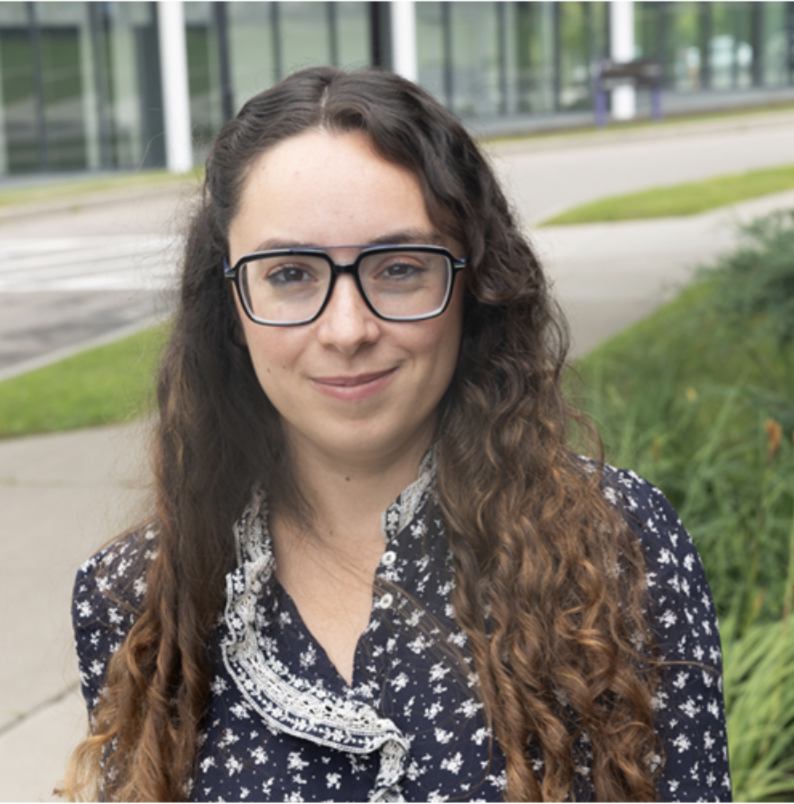 Dr. Ariela Parisi is a scholar specializing in Latin American speculative fiction, memory studies, and digital humanities. Her research examines the intersections between historical memory and future imaginaries, particularly in literature and film. She has published on topics such as Afrofuturism, Indigenous futurisms, and posthumanism in Latin America.
Alyvia Walters and Regina Marchi publish new article about anti-immigrant discourse online
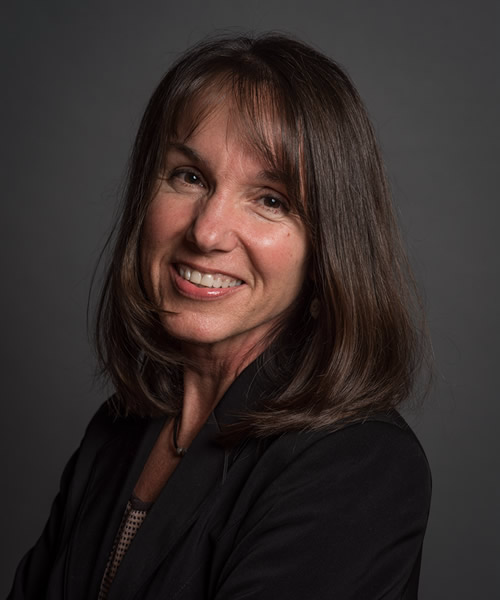
 Rutgers professors Alyvia Walters and Regina Marchi have published the article "From local tragedy to national news: Twitter, anti-immigrant discourse, and the weaponization of public grief online" in the Atlantic Journal of Communication. This article discusses anti-immigrant discourse on Twitter related to the 2018 murder of a 20-year-old White woman, Mollie Tibbetts, by an undocumented Latino immigrant. Additionally, it examines how the news narrative of her death was "usurped by Donald Trump and the right-wing Twittersphere and redeployed in the service of anti-immigrant narratives that the Tibbets family did not support".
For more information and access to the article, visit https://doi.org/10.1080/15456870.2025.2466556.
Rutgers Summer Study Abroad in Brazil: Art and Resistance

Read below for a quick introduction to the summer study abroad program in Rio de Janeiro, Brazil.
This program includes Portuguese language classes, history, and culture courses at PUC-Rio, along with guided tours to historical sites and museums. Some classes will be faculty-led by Isadora Grevan De Carvalho, while others will be taught by PUC professors. PUC-Rio has extensive experience in hosting international students and they provide a secure and well-structured environment, including experienced faculty, trained guides, and professional bus drivers to ensure a safe experience for all participants.
The total one month program will count as 6 credits.
For more information, visit the Rutgers Study Abroad website for this program here.
Kim D. Butler receives the 2025 National Endowment for the Humanities fellowship

CLAS member Kim D. Butler (Africana Studies/History) has been named a 2025 recipient of the National Endowment for the Humanities fellowship to complete a book on Black Power as it expressed itself through Black carnival groups known as Blocos Afros.
Blocos Afros are a distinct form of carnival performance created in Salvador, Bahia, Brazil during the nation’s last military dictatorship (1964-1985) when a group of young people founded Ilê Aiyê (loosely, “House of the World” in Yoruba). In the carnival of 1975, this exclusively Black group scandalized a society that asserted itself as a racial democracy, parading with signs proclaiming “Black World,” “Blacks for You” and (in English) “Black Power.” Dozens of others soon followed; these were neighborhood-based groups promoting black cultural pride, history, and politics during their Carnival processions, and providing social services throughout the year through youth activities and economic opportunities. At their height of popularity in the 1980s, they featured percussion sections sometimes over 100 strong. Hundreds of masqueraders paraded in African-themed costumes and sang original compositions about black experience. Elected queens of the blocos floated above the crowd on flatbed trucks dancing movements created especially for this style of Carnival. Made internationally famous by such artists as Michael Jackson and Paul Simon, blocos became an integral part of Carnival, the state’s cultural identity, and tourism.
In the 1970s, however, blocos were seen as a threat to the elite narrative that there racism did not exist in Brazil. Propelled to creatively negotiate the constraints of a military dictatorship, blocos afros found unique ways to articulate a popular vision of liberation encompassing an end to racial, sexual, economic and gender discrimination. At the same time, they constructed a counter-discourse that celebrated the very identities most disparaged in Brazilian society. In a moment when it seemed that the dominant classes held all-encompassing power, young Black teens created a powerful way to dismantle oppression—all to the exuberant rhythms of Carnival.
Kim Butler has written extensively about the African carnival clubs that first appeared shortly after Brazil became the last American nation to abolish slavery in 1888, and has been researching the clubs of the 1970s and 80s over the past decade.
See below for some images from the 2024 Ilê Aiyê 50th Anniversary Carnival:


Kaysha Corinealdi gives Keynote address at UNAM's Inter-American Studies Association Meeting

On February 19th, Latino & Caribbean Studies Associate Professor, Kaysha Corinealdi, gave a keynote address at the Inter-American Studies Association's bi-annual meeting held at Universidad Nacional Autónoma de México (UNAM) with the co-sponsorship of the Centro de Investigaciones sobre América del Norte (CISAN). The theme of the conference was "Futuros Posibles en las Américas/Possible Futures in the Americas. Professor Corinealdi's talk entitled "Afrosolidaridad en las Américas" focused on the history of Black Solidarity in the Americas, from the crucial role played by the Republic of Haiti in ending slavery in what later became Gran Colombia to the current day activism and consciousness-raising of solidarity groups like Afroresistance and the Directorio de Mujeres Afromexicanas Artistas.
Professor Corinealdi's talk also focused on centering the work of movement building scholars such as Lélia Gonzalez, Armando Fortune, Arturo Schomburg, Angela Davis, Christina Sharpe, and Mayra Santos-Febres, and mapped out steps that those invested in Black solidarity work could take on in our present moment. These included: (1) opposing ongoing denationalization efforts in the Dominican Republic, (2) opposing anti-Black immigration, refugee, and citizenship policies across the Americas, (3) engaging in an in-depth review of education programs to ensure anti-Blackness and xenophobia are not being promoted, and (4) embarking in more programs that promote collaboration between scholars, artists, activists and legislators, particularly during this Second International Decade for People of African Descent (2025-2034).
Professor Corinealdi's presentation can be viewed here.