
Event Examines Crisis in Colombia

Two experts on Colombian politics and society will present their analysis of the recent political crisis in Colombia at the CLAS. Dr. Edilma Suarez, a health practitioner and political scientists will join Julián Gómez Delgado, a Ph.D. Student in Sociology and Historical Studies at The New School for Social Research. Suarez will speak about “Social Outbreak in Colombia,“Social Outbreak in Colombia: Authoritarianism and Inequality” and Gomez Delgado about "“The Decline of the ‘Centaur State’ and other Stories of the Social Upheaval in Colombia."
The event will be held partially in Spanish and English and will be held over zoom on October 14 at 6PM Eastern time.
New Instructor joins CLAS: Aleman Rodriguez

Professor Gabriel Aleman Portillo is teaching a fully asynchronous and online section of our Introduction to Latin American Studies. Gabriel is from Puerto Rico and earned his Ph.D. in Culture and Society with a concentration in Latin American History from the University of Barcelona. His work has focused on intellectuals in the Dominican Republic/Haiti, especially Americo Lugo and Jean Price-Mars. He brings to the CLAS extensive teaching experience in Puerto Rico including Latin American Sociology, Race Relations in the Caribbean, Afro-Antillean Societies, Latin American Political Thought and Socioeconomic and Politics in Latin America.
New Grad Student Publication
Ph.D. Student Leo Valdes recently published "In the Shadow of the Health-Care City: Historicizing Trans Latinx Immigrant Experiences during the Coronavirus Pandemic." Valdes studies twentieth century African American and Latinx history and is working on a social and political history of trans liberation that centers black American and Latinx trans people.
Leo Valdes
US Latina & Latino Oral History Journal. University of Texas Press. Volume 5, 2021. pp. 32-65
Abstract:
This article historicizes the coronavirus pandemic experiences of two Latinx immigrant trans women by examining their oral histories within a broader social context. New Brunswick, New Jersey, is known as the "Health-Care City," although the significant Latinx population faces barriers to accessing quality health care. The article looks at the emergence of a trans immigrant community in this urban setting, nurtured, in part, by Oaxacan immigrants who have left an important cultural imprint on the city. Borrowing Joe Trotter's term, the article further suggests that trans immigrant women constitute a type of "industrial reserve" within a racialized workforce because anti-trans violence intensifies the disposability of their labor. The article explores how the pandemic exacerbated the ongoing social crises that shaped trans Latinx immigrant life in the city, particularly through an oral history with a COVID-19 survivor.
CLAS Affiliates named ISGRJ Early Career Faculty Fellows
Professors Matos, Zamora and Barragan were selected to hold a Early Career Faculty Fellowship by the the Rutgers institute for the Study of Global Racial Justice.
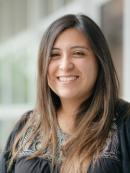
Yesenia Barragan
Assistant Professor of History, Rutgers–New Brunswick
Yesenia Barragan is a historian whose research examines the transnational history of race, slavery, and emancipation in Afro-Latin America and the African diaspora in the Americas. She earned her Ph.D. in history from Columbia University. She is a co-leader of the Slavery + Freedom Studies Working Group, an Interdisciplinary Seminar in Social Justice (ISSJ) at the institute.

Omaris Zamora
Assistant Professor of Latino and Caribbean Studies and Africana Studies, Rutgers–New Brunswick
Omaris Zamora studies transnational Black Dominican women’s narratives. She earned her Ph.D. in Iberian and Latin American literatures and cultures at the University of Texas, Austin.
Presentation by Prof. Jessica Marie Johnson

Professor Jessica Marie Johnson presented her new book to the Slavery + Freedom Studies Working Group at the Institute for the Study of Global Racial Justice. Professor Johnson is an Assistant Professor of history at The Johns Hopkins University. Her celebrated new book, Wicked Flesh: Black Women, Intimacy, and Freedom in the Atlantic World, shows how African women struggled to resist and adapt to enslavement, exploitation and patriarchy. The book covers a range of cases and archival materials from Senegal to French Saint-Domingue, Spanish Cuba, and the Gulf Coast, with New Orleans playing a prominent role in the structure of her book.