
Sandra Acocal presents at International Conference in Spain
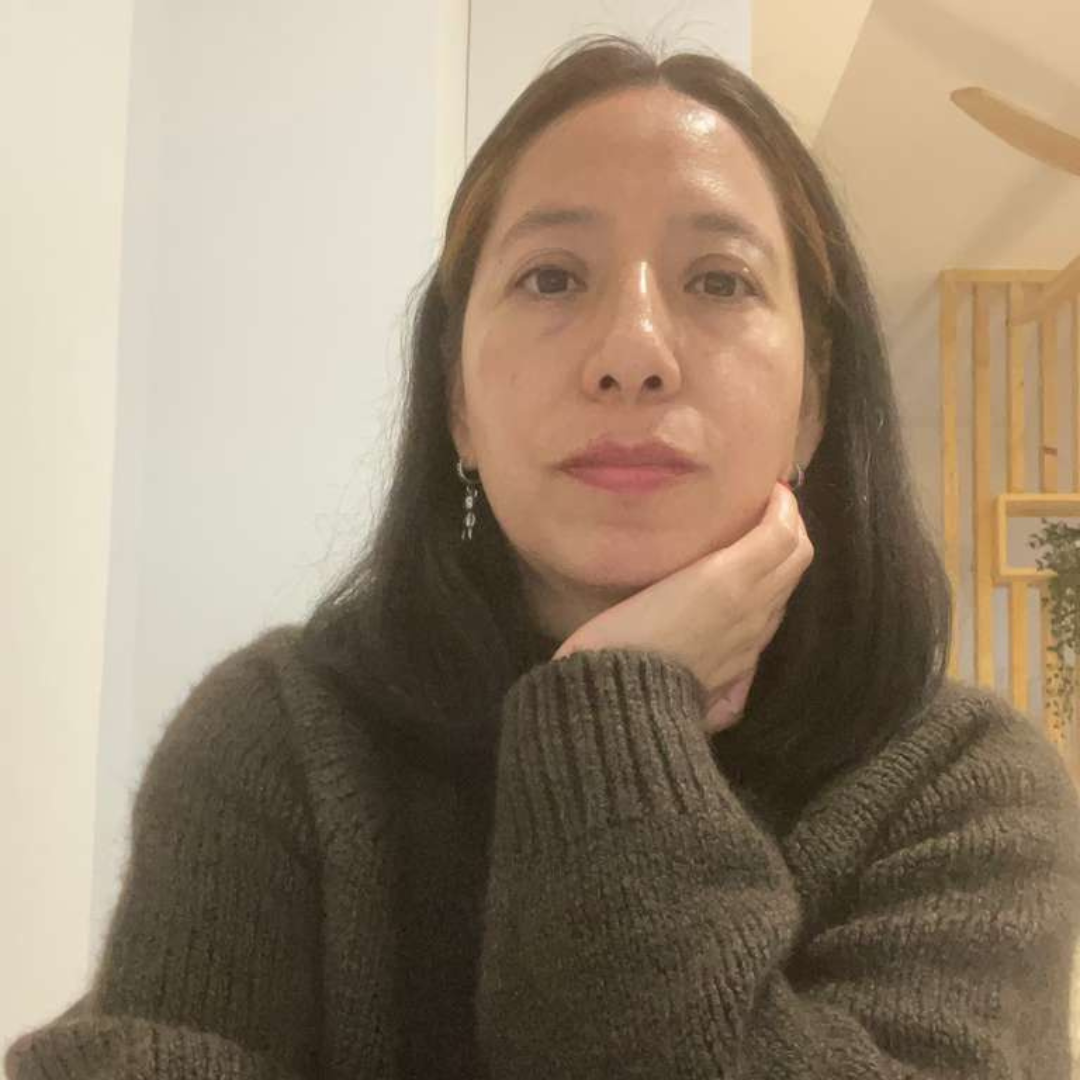
We are delighted that our PhD student in History, Sandra Acocal, presented her paper “Rupturas en la Casa noble india del Centro de México en el siglo XVI. Mujeres indias que alegaron derechos desde el sistema legal español” at the Congreso Internacional Nuevas Historias held in the city of Murcia, Spain, from December 1 to 3, 2025.
Drawing on 16th-century indigenous language sources, Sandra explained the contradictions and adaptations of indigenous and Spanish cultural and legal forms in the process of land disputes among indigenous noblewomen who, on occasion, did not have the opportunity to aspire to be ladies of a noble house.
The insights shared in this presentation are part of the broader research Sandra is conducting for her dissertation, entitled The Indian Nobility of Tlaxcala in the Sixteenth Century: The Institution of the Noble House. Her dissertation is supervised by Professor Camilla Townsend.
Keep going, Sandra!
Former Rutgers Postdoc Franklin Moreno Publishes New Chapter on Community Violence in Honduras
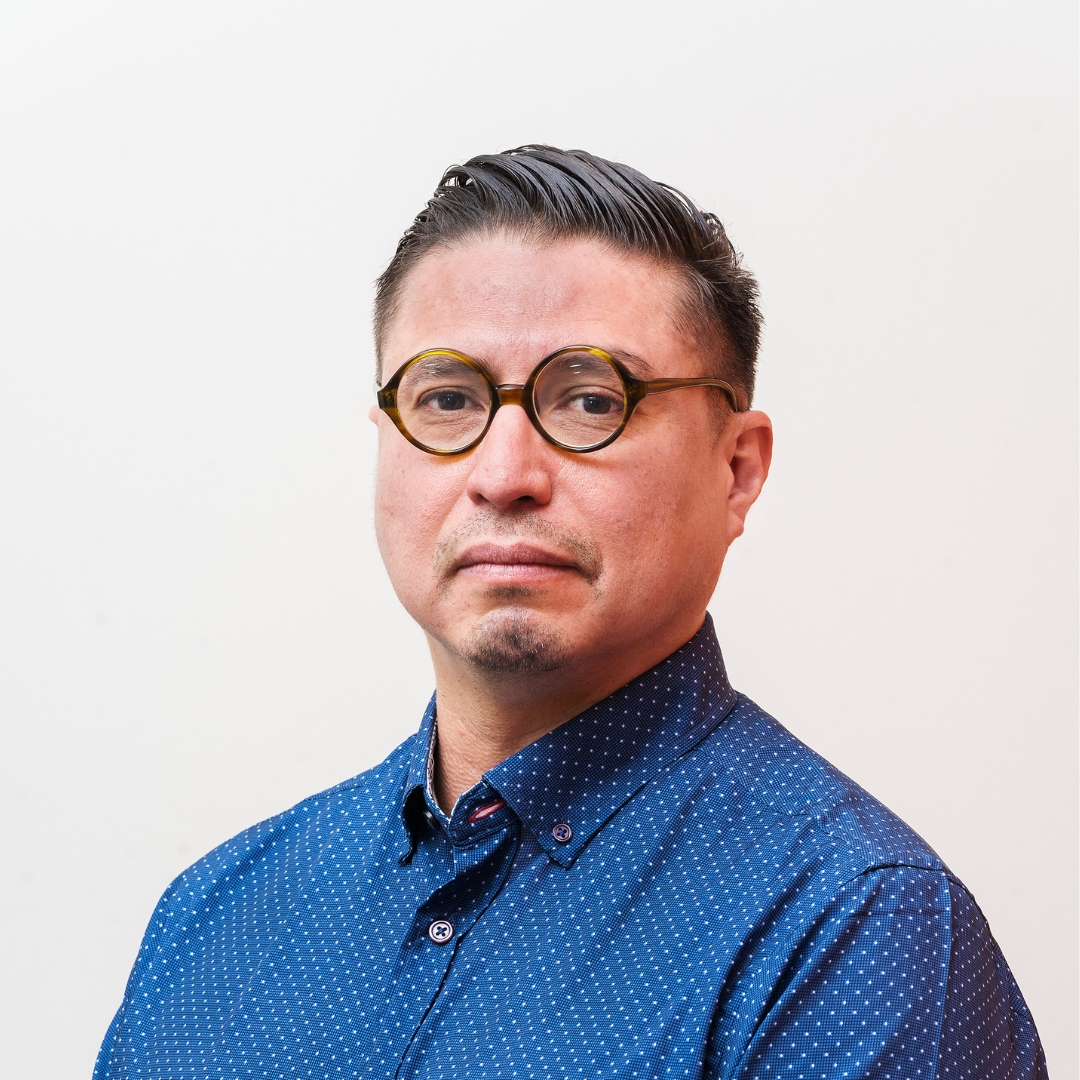
The Center for Latin American Studies is pleased to share the news of a new publication by Franklin Moreno, former Postdoctoral Fellow at the Institute for the Study of Global Racial Justice and the Department of Psychology–Newark at Rutgers University, and now Assistant Professor of Research in the Criminal Justice Department and the Public Policy Lab at Temple University.
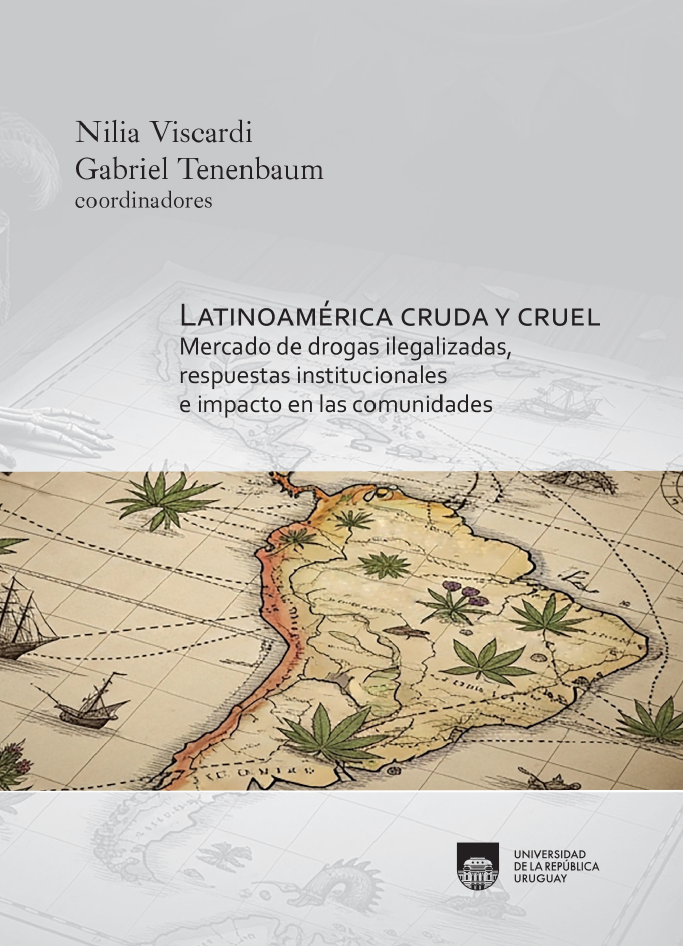
Franklin is co-author of the chapter “Relaciones de poder asociadas a la violencia comunitaria en San Pedro Sula: Consideraciones e implicaciones para la investigación en psicología del desarrollo sobre la exposición a la violencia,” written alongside E. Mark Cummings (University of Notre Dame) and Paul Boxer (Rutgers University). The chapter appears in the edited volume Latinoamérica cruda y cruel: Mercados de drogas ilegalizadas, respuestas institucionales e impactos en las comunidades, edited by Nilia Viscardi and Gabriel Tenenbaum and published by the Universidad de la República Uruguay.
The chapter examines the power dynamics shaping young people’s exposure to community violence in San Pedro Sula, Honduras. Drawing on mixed-methods research, the authors analyze how top-down and bottom-up relationships between families, gangs, and the police influence youth experiences of safety, insecurity, and emotional security development. The study also highlights the broader implications for developmental psychology research on exposure to violence.
The edited volume brings together scholars from multiple countries and disciplines to explore themes of violence, security, drug markets, and institutional responses across youth, community, political, and state spheres.
Franklin, who also holds an M.A. in Latin American and Caribbean Studies from NYU, remains connected to Rutgers as a member of the Mexico–Central America Working Group at CLAS. We congratulate him on this important contribution to the field.
Welcome to Sylvia Cifuentes, Visiting Scholar at CLAS for the 2025–2026 Academic Year
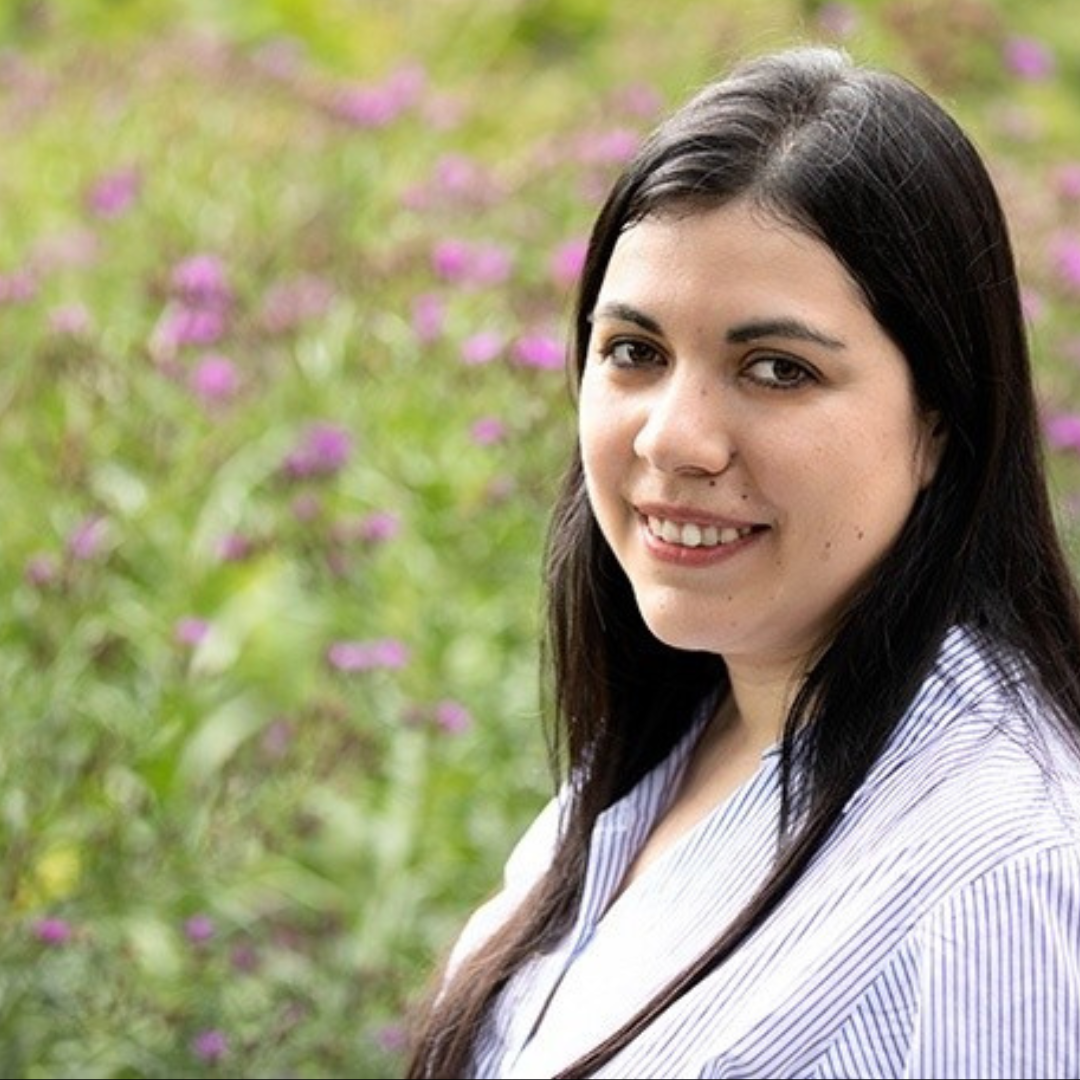
The Center for Latin American Studies is delighted to welcome Sylvia Cifuentes as a Visiting Scholar for the 2025–2026 academic year. Sylvia comes to Rutgers from Mount Holyoke College (South Hadley, MA), where she serves as Assistant Professor of Environmental and Social Equity and Justice in the Department of Environmental Studies.
Sylvia is an interdisciplinary scholar specializing in environmental justice, Indigenous geographies, global climate politics, and decolonial studies, with a strong focus on the Amazon region.
Her research explores Amazonian Indigenous climate initiatives, land and territorial rights, multispecies climate justice, and the intersections of technology, energy, and wellbeing—areas of inquiry that resonate deeply with CLAS’s mission.
We are thrilled to have her join our community and look forward to the intellectual contributions she will bring throughout the year.
As part of her plans for 2026, Sylvia expects to give a talk on one of her publications in collaboration with the Department of Geography at Rutgers University, and to take part in organizing an event on extractivism in Latin America. Both activities are planned for the Spring 2026 semester.
Find more about Sylvia's work: here
Graduate student wins award at the Society of Visual Anthropology Film Festival
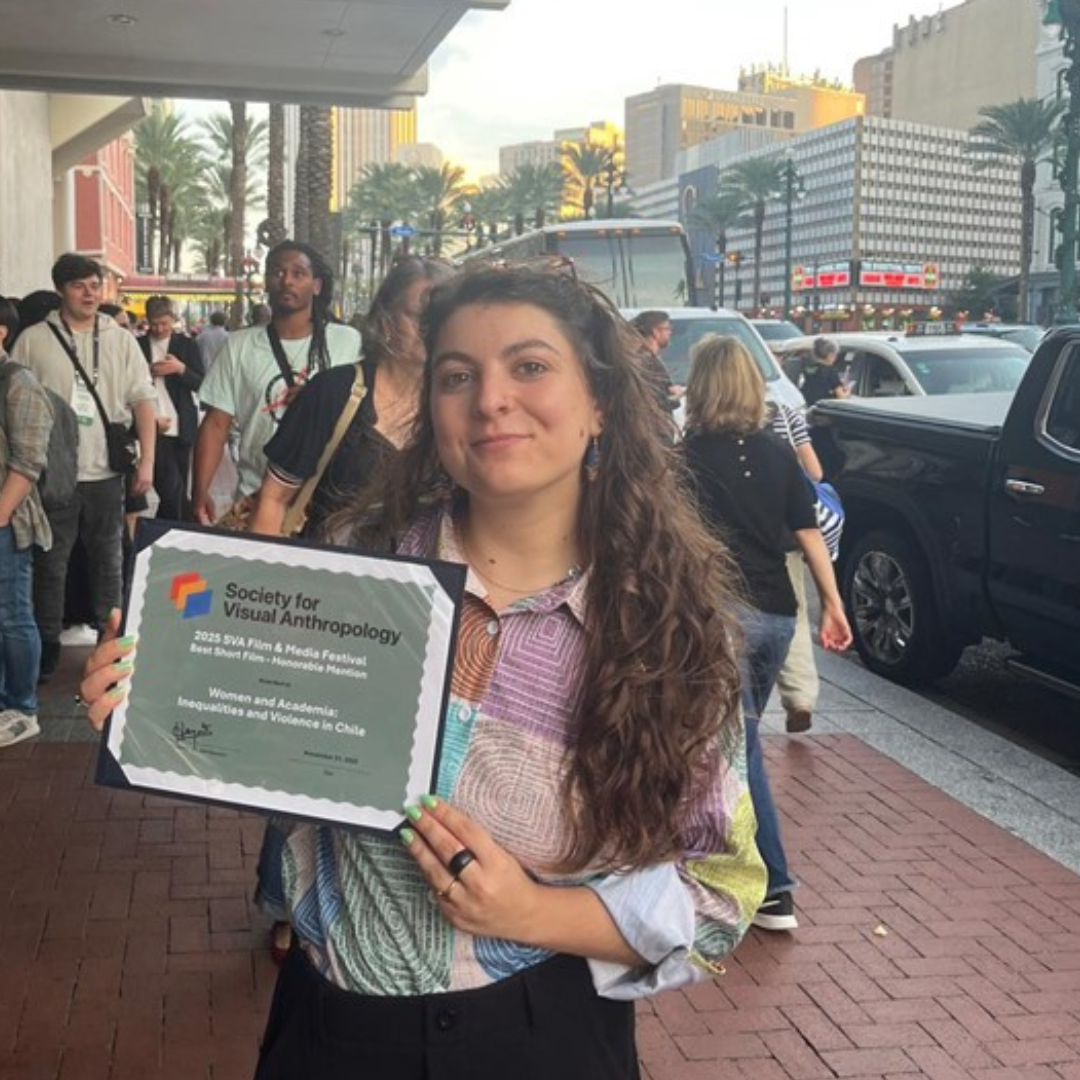
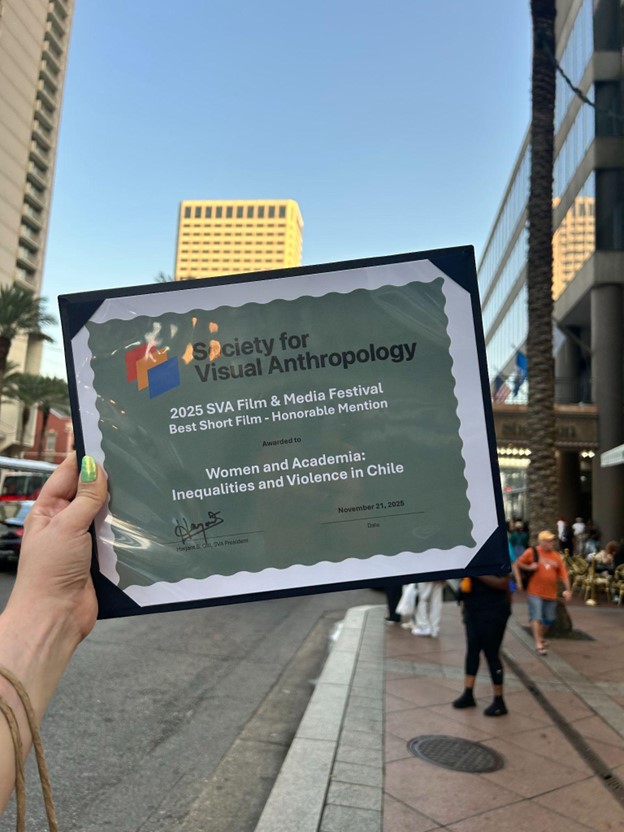
We are so happy to share the news that Gloria D'Alessio PhD student in Anthropology, won the Honorable Mention Award for her short film Women and Academia: Gender Violences and Inequalities in Chile. We talked to Gloria about her accomplishments, and here is what she shared with us:
Gloria, tell us more—what is the film about?
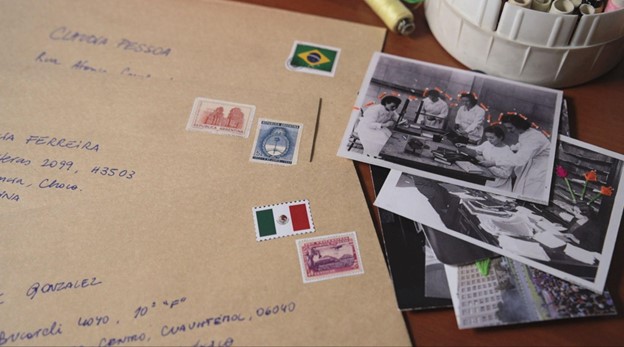
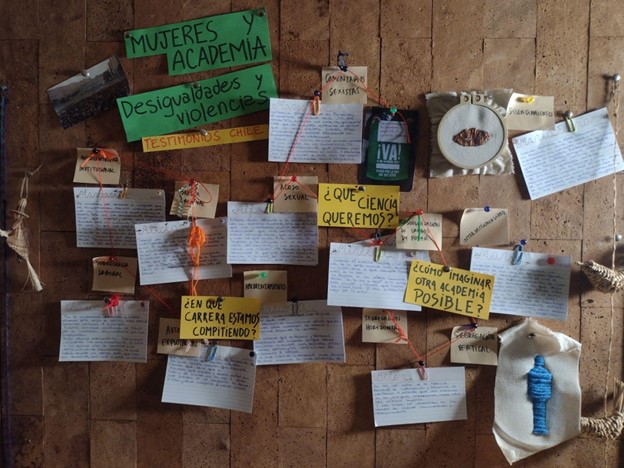
The film explores the ongoing gender inequalities that persist in Chilean academia, particularly within the social sciences. The first part follows a researcher who transforms her frustration into an invitation to several colleagues to conduct a comparative study across Chile, Argentina, Brazil, and Mexico. The second part brings forward the history of university and street activism in Chile, through a conversation between three different generations of women scholars. Finally, part three, “Breaking the Silence”, looks at testimonies from academics who experienced situations of violence, while the researcher analyzes and reflects on their stories.
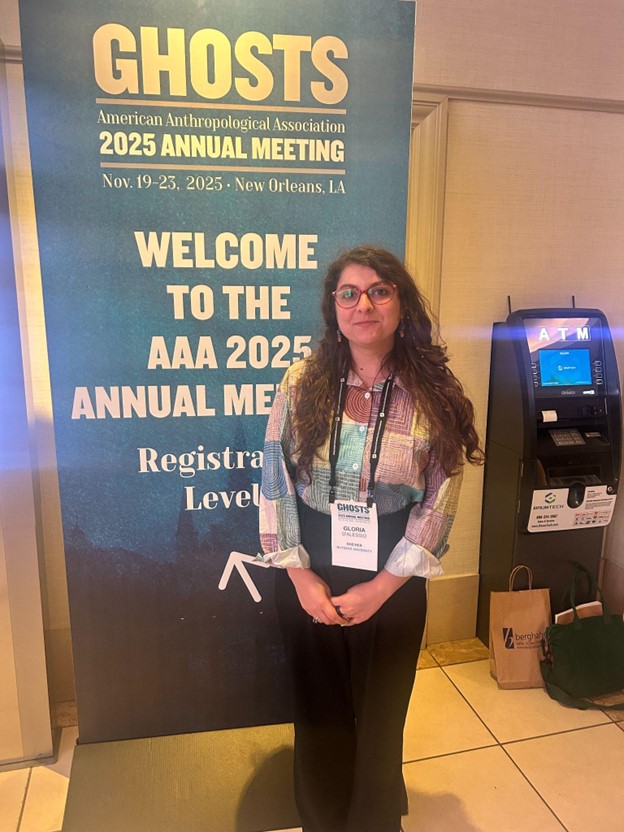
During the Annual Meeting of the American Anthropological Association (AAA) in New Orleans (November 18–23), the Society of Visual Anthropology Film Festival—directed by Mariam Abazeri and Anna Neumannonde—presented its official selections. The festival received more than 260 submissions, and Women and Academia was not only accepted but also received an Honorable Mention Award. It was an incredibly moving experience.
Where did the idea come from?
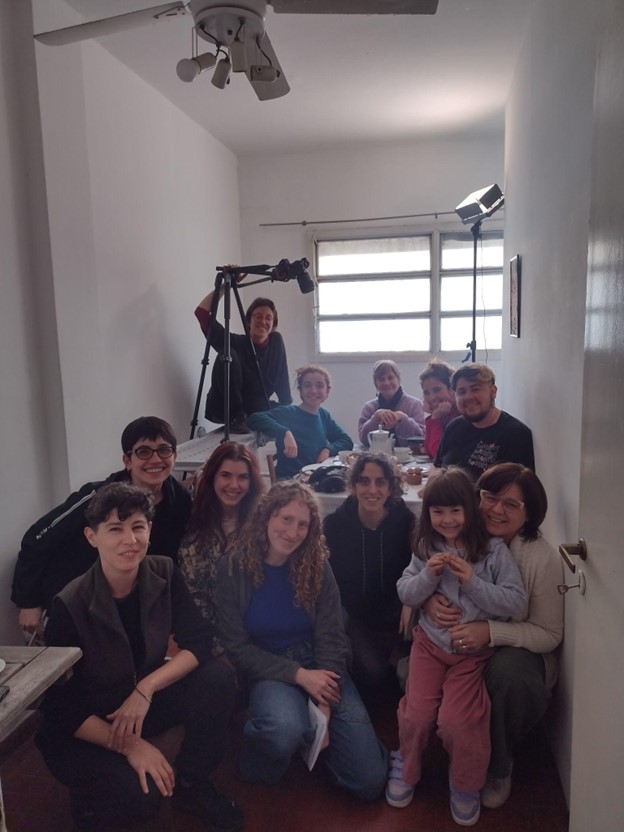
The short film is based on a research project titled Women and Academia, directed by Drs. Menara Lube Guizardi, Herminia González, and Carolina Stefoni, and carried out by a large team of young researchers and fellows. The project, funded by ANID (Chile), has already been published as a book in both English and Spanish. The team invited our collective, La Cocina de la Investigación, to develop proposals to share the project’s findings with broader audiences, using artistic languages that go beyond academic writing.
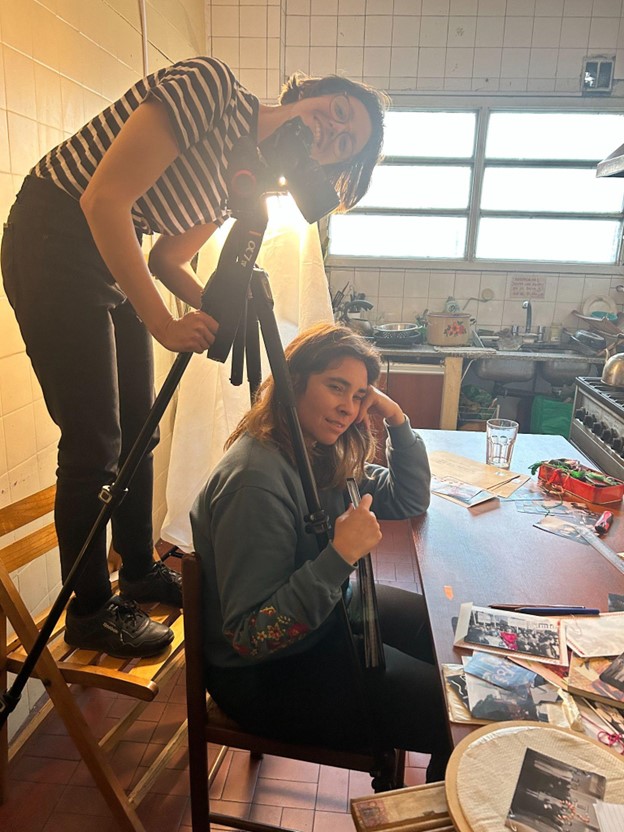
This began a nearly year-long process in which we studied the research, selected the core themes we wanted to bring into the film, and carried out a creative transposition process: writing a new script inspired by the original study but transformed for cinema. In September 2024 we filmed in Buenos Aires, and after post-production, we published all the videos on YouTube.
Who is part of the project?
La Cocina de la Investigación is a feminist working collective founded in 2020. We collaborate across social research and artistic disciplines such as film, photography, and web design. The collective includes Sofía Bensadon, Victoria Sanguineti, Florencia Valese, Paula Man (UNSAM/Argentina), Rocío Deza (Hospital Italiano/Argentina), Miranda Hochman (Humboldt University of Berlin), and Gloria D’Alessio (Rutgers University).
What were some of the challenges?
One of the biggest challenges was translating a rigorous research book into short videos of under ten minutes. Selecting what to include requires a lot of care and sensitivity. It is also challenging to find the right visual and narrative language. In this short film, we chose to work with the textile universe of threads, embroidery, and arpilleras, an artistic form of protest that emerged during the last civic-military dictatorship in Chile.
This project also required us to dive into worlds that were entirely new to us. We had to develop scriptwriting skills and take on different roles during filming, which involved a steep learning curve. Working collectively with people from diverse disciplines, and within a large team, also meant negotiating creative decisions, building consensus, and learning how to move together through the complexities of collaborative production.
Another major challenge is being young women film producers in Argentina, particularly in a context of widespread defunding of independent cinema and science. In that regard, we received financial support from the Women and Academia research team, as well as from EMIC+, a socio-territorial research consultancy led by anthropologist Soledad Córdoba.
What other projects are coming next?
We are currently in post-production for the short film focusing on the Argentine case, another project that is taking us roughly a year. In the future, we hope to continue collaborating with researchers and teams who are exploring transdisciplinary approaches to communicating social science research.
Why do you find this work important?
Although anthropology and film share a long historical relationship, we believe it is crucial to continually find new ways to bring social research to broader audiences and into formats that move beyond academic writing. In this sense, making films together with colleagues who are social scientists allows us to navigate transdisciplinary worlds that reach people far beyond academia.
When we published the videos on YouTube, the responses we received came from dancers, architects, school teachers, people in the culinary world, and many others. Their reactions underscored how these stories resonate across diverse fields. Importantly, the short films also had a strong impact within the scientific community itself: several women researchers recognized their own experiences of inequality and violence in the narratives and decided to share their stories after watching the films.
Watch the complete short film: here
Read the book How to Suppress the Careers of Female Social Scientists – Volume 1: A Feminist Ethnographic Anti-manual from Chile edited by Menara Guizardi, Herminia González, and Carolina Stefoni (2025): here
Congratulations to Gloria and her colleagues for this award.
Conference in Spain co-sponsored by CLAS
The Center for Latin American Studies (CLAS) is pleased to co-sponsor the Congreso Internacional Nuevas Historias 2025, an academic gathering that will take place from December 1–3, 2025, at the University of Murcia (Spain). Organized under the theme “Repensar los márgenes: identidades, discursos y prácticas frente al poder,” the conference brings together scholars developing innovative historical approaches that challenge traditional narratives, foreground subaltern actors, and rethink the ways power, identity, and social boundaries have shaped historical processes across regions and periods.
The conference program is organized into thematic symposia exploring topics such as colonial and transatlantic borderlands, mediation and negotiation across imperial spaces, and new methodological and theoretical perspectives for rewriting history from critical standpoints. These conversations aim to center actors and experiences often marginalized in dominant historiographies and to broaden the analytical tools used to understand the past.
CLAS is also proud to highlight the participation of Sandra Acocal Mora (PhD Candidate in History at Rutgers University), who will present her paper “Rupturas en la Casa noble india del centro de México en el siglo XVI. Mujeres indias que alegaron derechos desde el sistema legal español.” Her contribution aligns closely with the conference’s objective of reexamining historical margins and amplifying voices that have long been overlooked.
We wish Sandra and all participants the very best as they share their work and take part in the rich conversations of Nuevas Historias 2025.
More information and full conference program: here.