
Laura de Moya-Guerra at events in Colombia
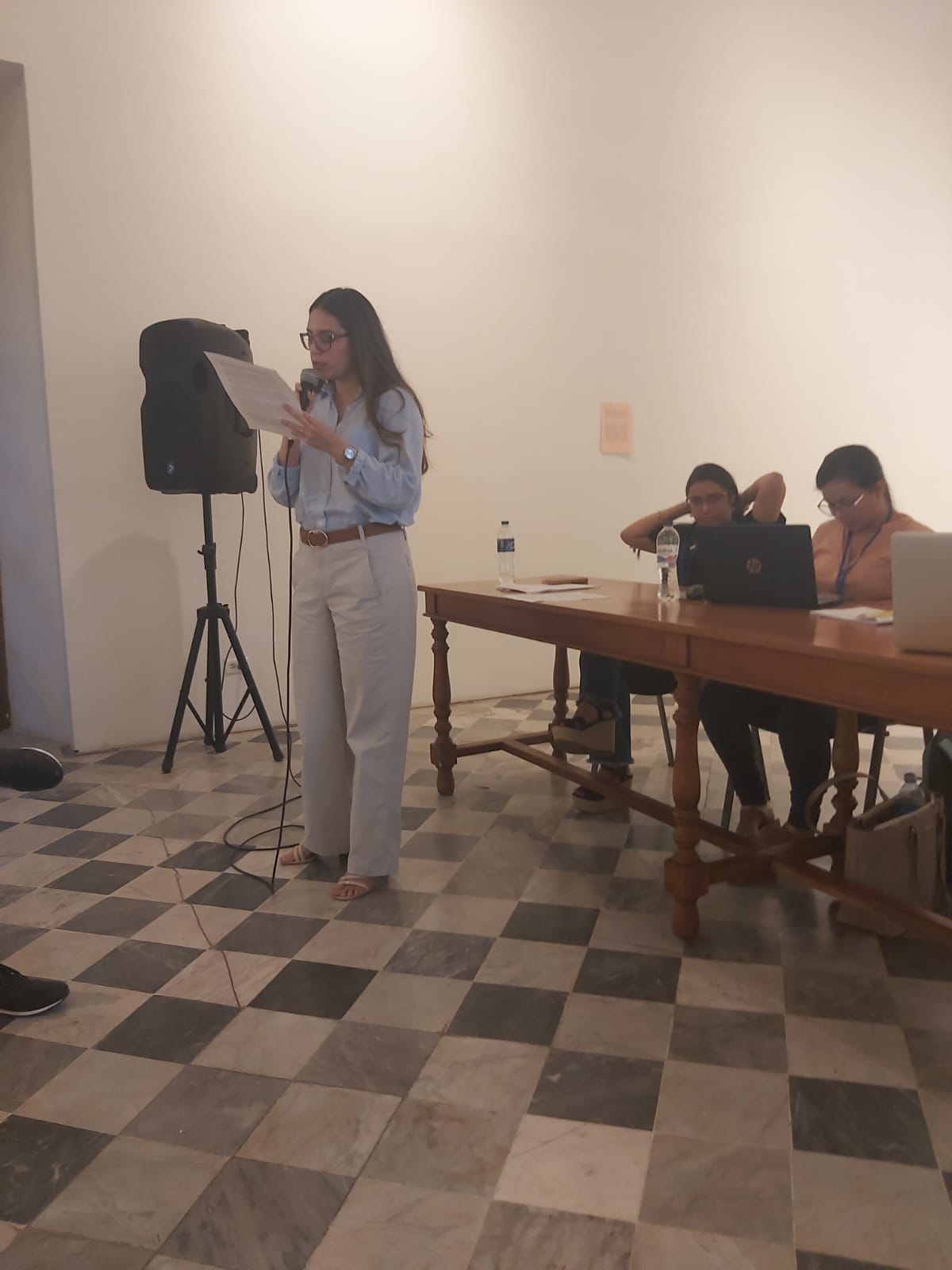
Laura de Moya-Guerra, PhD student in History, presented at the XX Congreso de la Asociación de Historiadores Colombianos "La República en Plural" that took place from April 25 to 29 in Cartagena. Her presentation was entitled "Negocios a la distancia: el rol de los familiares árabes que no migraron a Barranquilla 1920-1940."
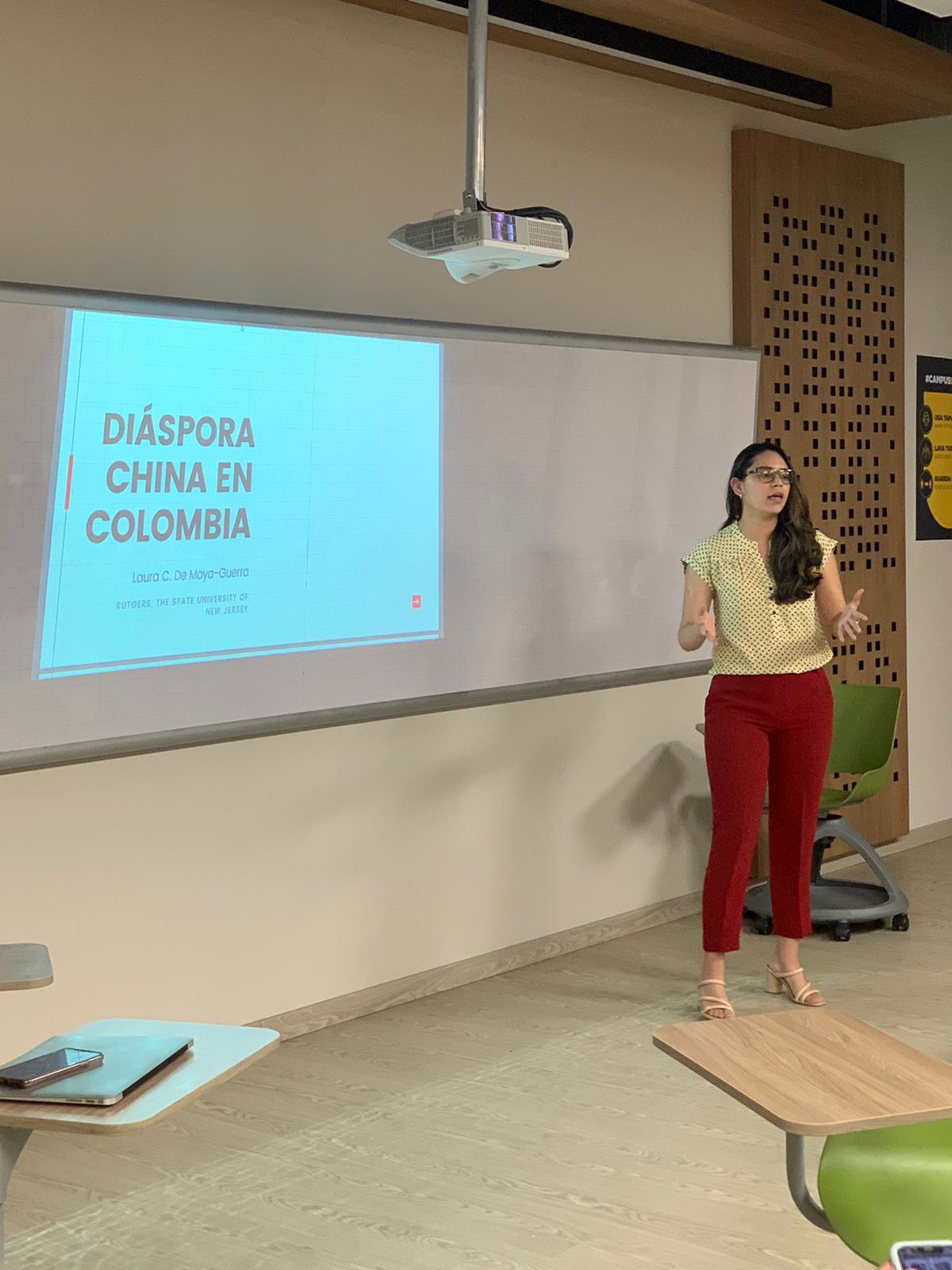
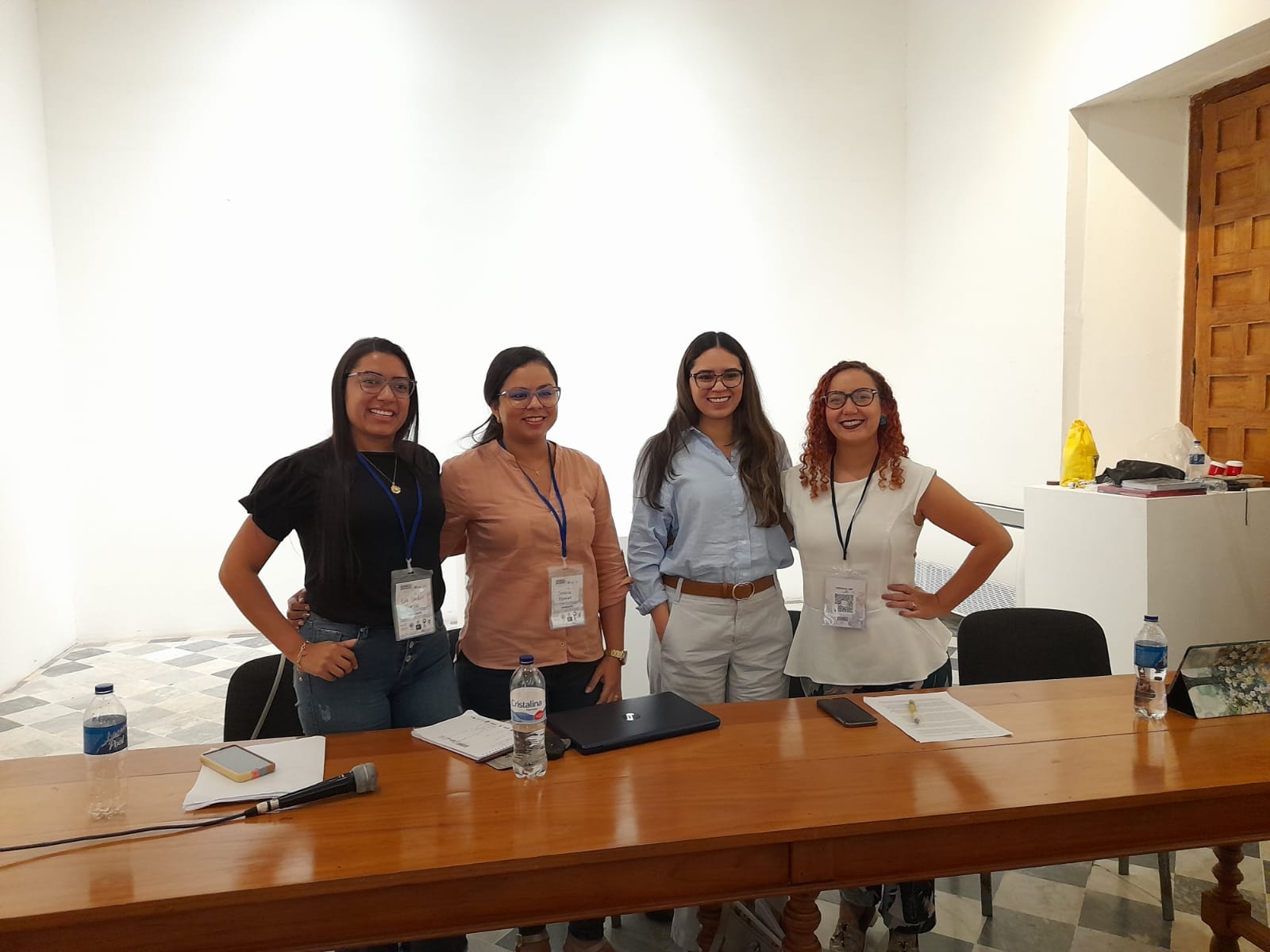
Laura was invited to discuss the new book "La presencia china en el Gran Caribe: ayer y hoy," coordinated by MuKieng Adriana San Beng. In the conversation, she shared details about her research on the Chinese in Colombia. This event took place on May 3 at the Universidad del Norte, Barranquilla.
Lisette Varon Carvajal at La Feria del Libro in Bogota
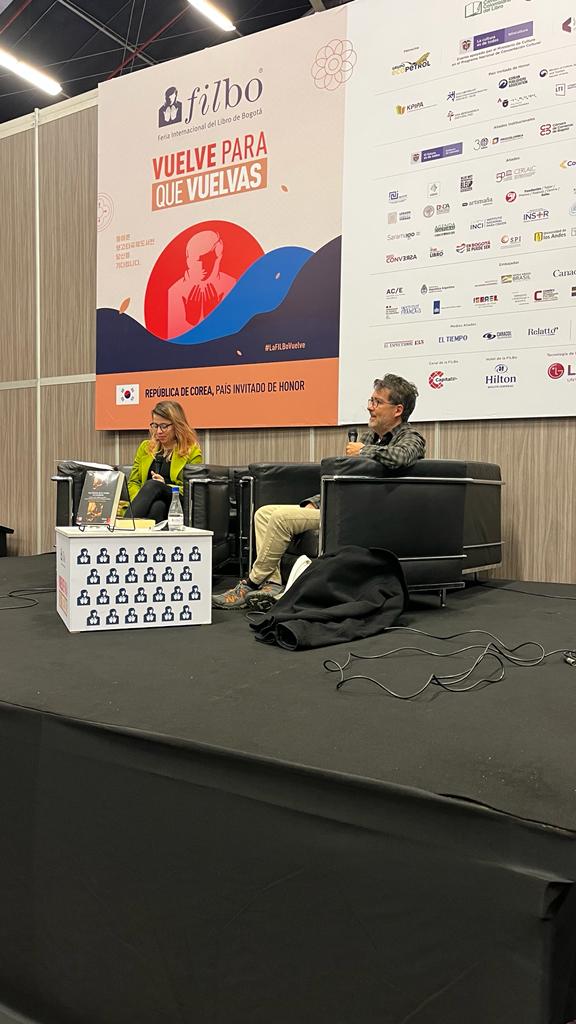
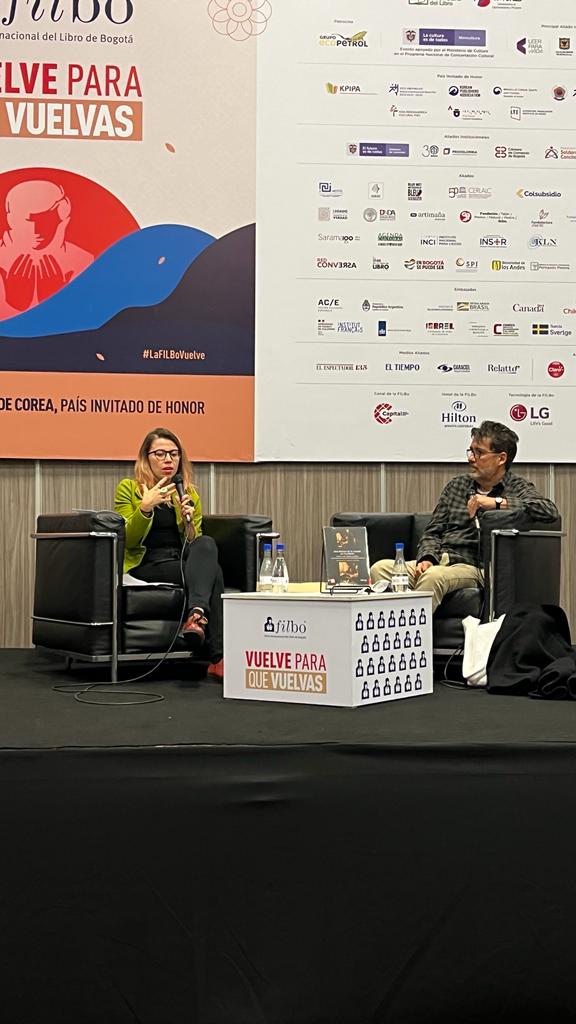
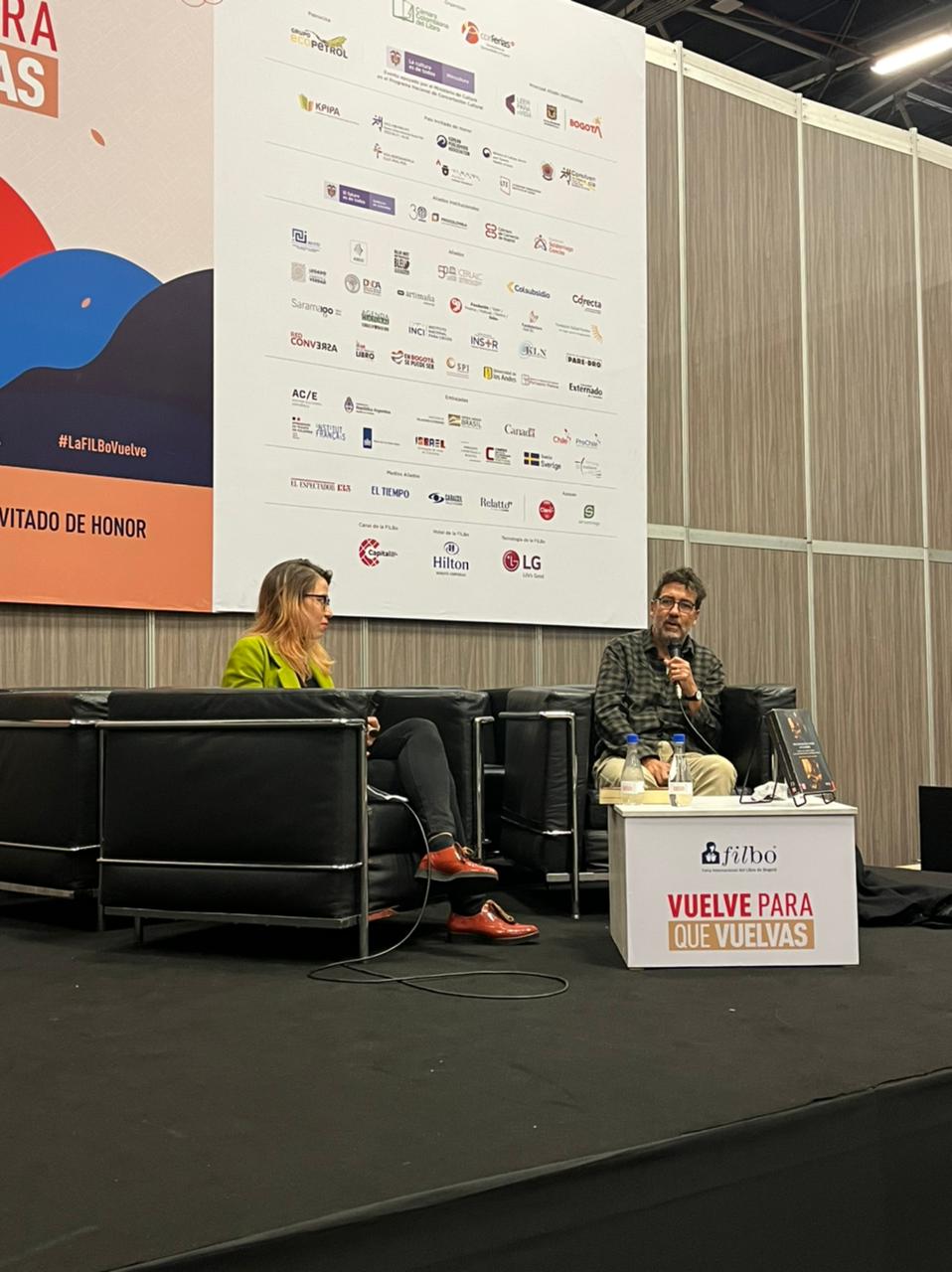
Lisette Varon Carvajal (Ph.D. candidate, History) visits the Feria del Libro in Colombia:
"On April 22nd, I was invited to talk with Professor Mauricio Nieto at Bogotá´s Book Fair. We talked about his recently published book: "Una historia de la verdad en Occidente: Ciencia, arte, religión y política en la conformación de la cosmología moderna." We discussed what it means to write a history about truth-making from Colombia, how it can be challenging to historicize truth, and ultimately, what is the task of historians in debates about post-truth, science, and knowledge-making.
Newark hosts Dr. Antonia Gabriela P. de Araújo
Dr. Antonia Gabriela P. de Araújo presented her work to a Rutgers Newark audience on 19 April 2022 as part of a program organized by Prof. Laura Lomas and co-sponsored by the CLAS.
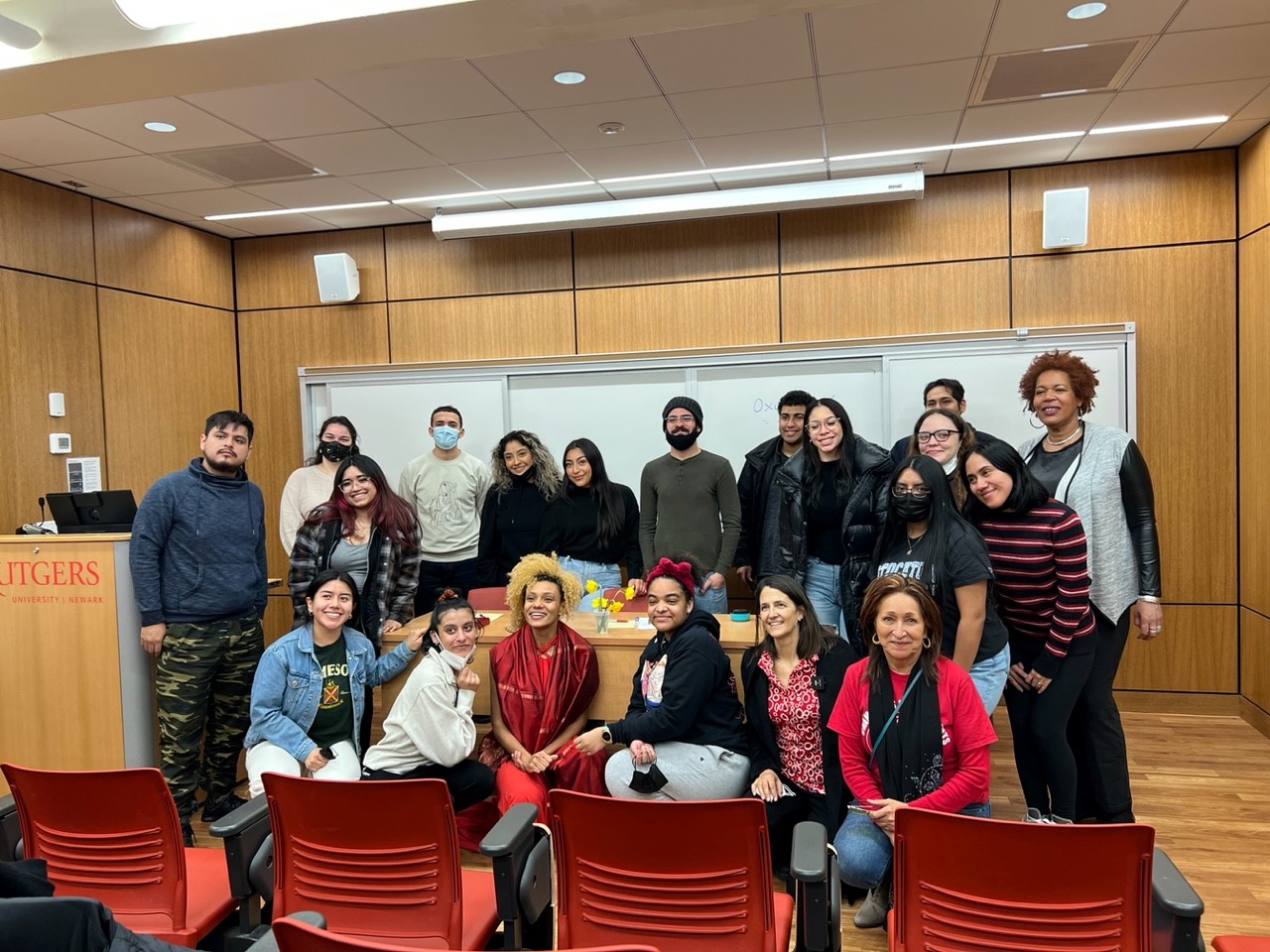
Dr. Araújo's lecture/performance offered a timely meditation on how writing itself can be an act of resistance and self-emancipation. Dr. Antonia Gabriela P. de Araújo, who has recently received an award for her doctoral dissertation that earned her a Research Affiliate position at Harvard University Hutchins Institute starting in fall 2022, described how her own writing process required fortitude given the ongoing threats to the existence of persons of indigenous and African descent in Brazil, with her former colleague and friend Marielle Franco as a case in point.
Dr. Araújo began by invoking the writing of Carolina de Jesus in Quarto de Despejo, whose handwritten manuscripts found in a favela document the writing life and resistance of black women. Dra P. de Araújo situated herself as a survivor too, as the daughter of an indigenous father who survived prison, and an African-descended mother who worked in domestic service. Her personal anecdotes enabled the audience to see connections between her theoretical work, social realities, and the writing of novelists, poets and critics of the African diaspora including Jamaica Kincaid, Carolina de Jesús, Conceicao Evaristo, Gayl Jones, M. Jacqui Alexander.
The performance involved sounds of a calimba (an African instrument), singing and movements that are done collectively as an activation of our stepping on the earth and taking root - grounding.
Natural forces have also sustained us, have made possible the survival of diasporic subjects, including the experiences of Latinx and Latin American subjects of the African-diasporas that figure in literary texts by the writers under consideration in this lecture. Dr P. de Araújo discussed Erotic Autonomy and masculinity and feminity in surprising terms, as forces that can coexist in the same person or entity, much as they do in the orixa Oxumare and Yassam, or the archetype that represents wind and storms. Students encountered this Brazilian and Caribbean Afraamerican cosmology as a framework for understanding the characters in the novels, and for thinking about survival in the face of difficult conditions during and after the pandemic.
We thank Dr. Antonia Gabriela P. de Araújo for a truly transformative morning of live, direct, in-person connection. Her words offered inspiration and a model for students and faculty as they are composing their research and final essays inspired by this literary and theoretical tradition. I also want to thank our sponsors and cosponsors, the English Department at Rutger University-Newark, the Clement Price Institute, the American Studies Program, the Department of African-American studies and Center for Latin American and Caribbean Studies.
Edward Veloso, a student of Brazilian and Mozambican descent, assisted with the translation. Two powerhouse alumni (activists from the early 1980s), Bernadette Scott and Gloria Montealegre, joined us and expressed their desire to continue to forge connections between local school districts and sister institutions such as Plainfield School district, Essex Community College and NJIT in future.
Prof. Laura Lomas, Rutgers University--Newark
For the recording of the event. Passcode: F$iRV5d#
New Undergrad Representative Named
Alexis Ramirez will be the undergraduate representative to the CLAS for next year.
CLAS and LSRI Receive Grant from Rutgers Global
North-South Learnings and Collaboration on Emigration, Immigration and Latino Studies, 2022-2024
The CLAS and the LSRI have won a grant form Rutgers Global to establish a new program that will link Latin American scholars with Latino Studies Specialists in Rutgers and the US.
The Center for Latin American Studies, in collaboration with the Rutgers Latino Studies Research Initiative, will use funding from the International Collaborative Research Grants to establish a partnership with institutions from four Latin American countries in organizing a permanent seminar on research on Latino/Latin American Communities in the US.
This partnership is designed to address three core problems:
1. Knowledge about (especially non-immigrant) Latino communities and history in academic circles in Latin America. These include the massive production of historical and ethnographic studies in English of the last 20 years that has provided the basis for the tsunami like entry of Latino Studies to the US academy.
2. Knowledge among US scholars including those that focus on US communities about “deep” national dynamics related to emigration and the local impact of transnationalism in Latin American communities. These themes include gang violence, women’s mobility, labor markets and government/US policing and violence.
3. Enhance scholarly communication, publishing, and even conceptual apparatuses between academics in the US that focus on Latinos and Latin American immigrants and researchers and teachers in Latin America.
4. Enhance collaboration takes place, illustrated by the work of Professor Berg at Rutgers and Professor Massey at Princeton, usually remains one-on-one and produces traditional scholarly publications.
All meetings and events will be virtual. If in-person collaboration is required travel will be funded by CLAS.
The partnership will produce various programs:
1. By-invitation planning meeting with leaders in the guest institutions.
2. Six presentations over two years by scholars from the guest institutions that focus on local, ongoing research on the social dynamics that produce emigration and on the local impact of transnational practices from Latin American immigrants in the US, as well as immigration and security practices of the US state. Some emphasis will be placed on the emerging complex multi-national migration dynamics that make Mexico and Puerto Rico bridges of migration for people originating elsewhere.
3. Sometime in the first half of the second year, a major public symposium in Spanish that will present in-depth presentations on the state-of-the-art research on Latinos in the US academy by Rutgers and other guest presenters. This will draw on the leading role in Latino studies of the LSRI and the faculty of the Department of Latino and Caribbean studies.
Staff will do in-depth work among dozens of Latin American institutions to participate in this symposium. The goal of this symposium is to include thousands of registered participants from the Latin American academic and policy world and produce permanent working and communication groups.
4. Seeding and facilitation of further one-on-one or group collaborations that may result from these forums and dialogs.
5. A website and email lists to coordinate and communicate all this work.
Partners
We will be inviting partnerships in Colombia, Puerto Rico, Mexico, Guatemala, and Honduras—all countries that have experienced massive emigration trends in the last 20-30 years and that have significant and/or growing presence in US communities. The selected institutions are leaders within their national or regional educational ecosystems and are known to have researchers likely to engage with this project. Each institution listed has multiple teaching and research centers from which specific scholars will be invited to participate. The expectation is that we will develop a group of about 20-25 scholars willing to engage with this project but that participation in resulting events will be far wider.
Aldo Lauria Santiago, the Director of the CLAS, will serve as the Director for this program. Faculty drawn from CLAS faculty affiliates and Latino & Caribbean Studies faculty will be invited to prepare presentations for the workshops and seminars. Professor Ulla Berg (LatCar/Anthropology—SAS) will serve as coordinator for the Graduate Assistant’s work and will help implement the program proposal as presented here. Funding will be used to hire a graduate student (or equivalent) to manage the events and communication.