Celso Mendoza selected for Bridge-to-Faculty Post Doctoral Position
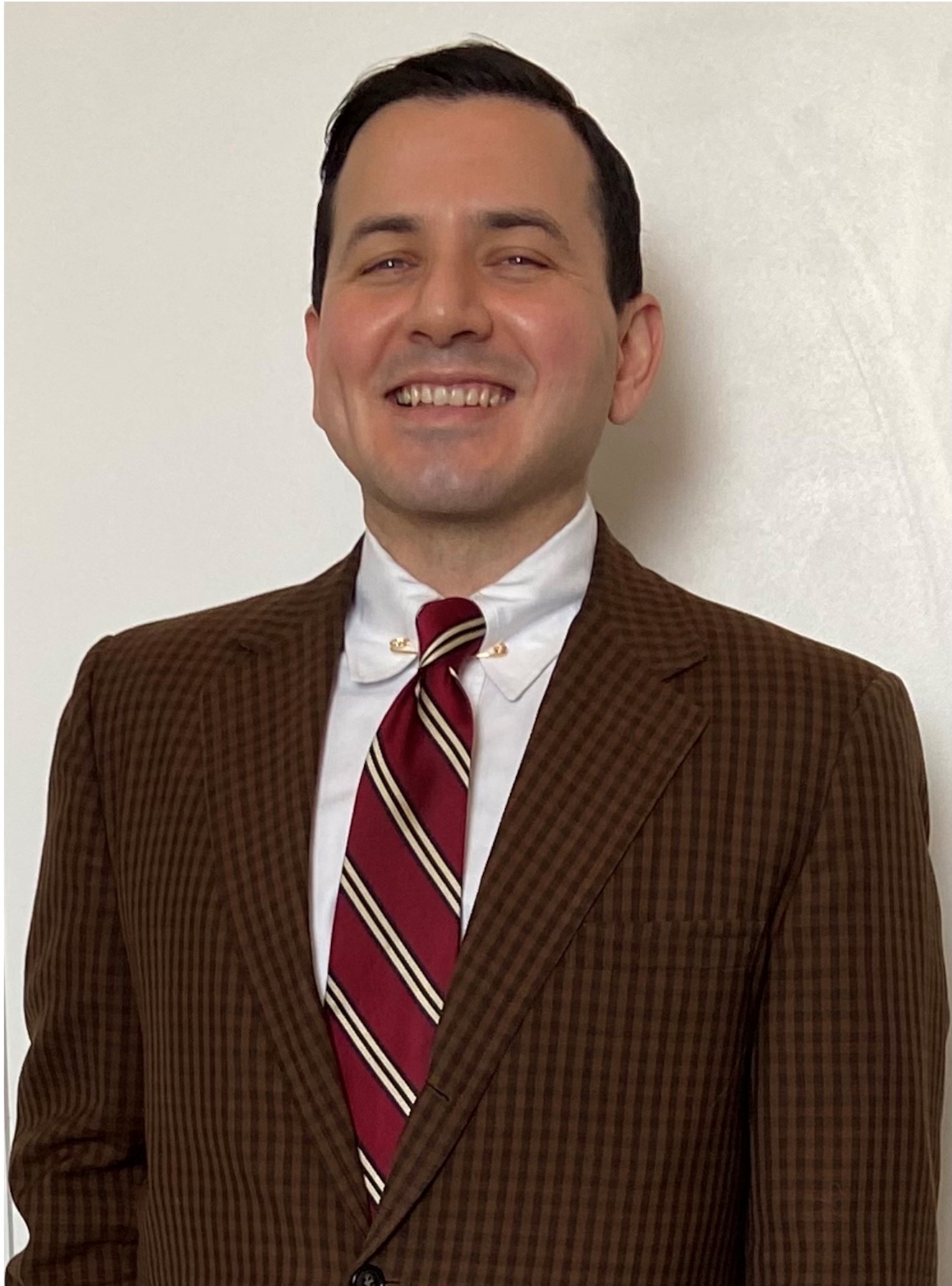 Congratulations to Celso Mendoza for being selected for a position as Bridge-to-Faculty Postdoctoral Research Associate with the History Department of the University of Illinois, Chicago!
Celso is ABD in the History Department's Latin American program. His dissertation committee is chaired by Prof. Camilla Townsend and includes Professor Lauria Santiago, Emeriti Professor Mark Wasserman and Professor Tatiana Seijas.
The Post Doctoral position will transition to the tenure track within two years. Celso will be defending his dissertation this summer and will be working on transitioning it to a book manuscript during the term of the postdoctoral position. Celso works on how the Aztecs recorded and resisted Spanish rule after the conquest and the annals of Juan Bautista, a 1560s Mexica narration. He will also be working on multiple article submissions including a retelling of the battle of Otumba.
CLAS is Excited to Announce Our New YouTube Channel
March 17, 2023
CLAS is happy to announce our brand new YouTube channel!
CLAS is devoted to promoting pedagogy, research, and service in and about the broader region known as Las Américas, and with the new YouTube channel we will continue to generate new insights into Latin American culture and society, politics and economics, and environment and ecology.
As of now, we are uploading past conferences, presentations, and talks featuring both Rutgers scholars and guest Latin American and Caribbean scholars from around the world. There will be many more videos to come!
Check out the channel and please subscribe using the link above!
CLAS Director Aldo Lauria-Santiago Featured in Daily Targum Article about NB Mexican Consulate
February 27, 2023
"Mexican government finalizing plans to open consulate in New Brunswick"
Excerpted from The Daily Targum article, found here.
The Mexican Foreign Ministry recently announced the establishment of a new Mexican consulate in the city of New Brunswick, according to a press release.
Mexican consulates provide vital services for passports, visas and other legal assistance but also deepen community outreach and bilateral relations, she said. The Mexican government outnumbers all international consular efforts with more than 50 locations nationwide.
Aldo A. Lauria Santiago, the director of the Center for Latin American Studies and a professor in the Department of Latino and Caribbean Studies, said Rutgers would benefit from fostering a relationship with the new Mexican consulate and building partnerships for the various Latin American academic departments and organizations on campus.
For example, the New York consulate has supported the students of Lehman College through its Mexican Studies Institute and financial aid programs directed at Mexican nationals, he said.
"At Rutgers, the number of students of Mexican descent has increased dramatically in the last 10 years," he said. "Other potential issues involve resources for Mexican descent students transitioning to graduate school, anti-racist and discrimination work, high school completion and support for day laborers and unions."
See the link above to read more!
Briana Nichols Publishes a Piece in Columbia's Regional Expert Series
February 20, 2023
CLAS Postdoctoral Fellow Briana Nichols publishes a piece called "Indigenous Education and COVID-19 in Guatemala" for Columbia University's Center for Mexico and Central America (CeMeCa)'s Regional Expert Series.
The Regional Expert Papers Series aims to publish selected reports, papers, and data from research centers in Central America and Mexico that would otherwise not be available to an English language audience. They also invite researchers and academics based in the United States who specialize in this region to contribute selected works to the series. The Regional Expert Papers Series is curated by Dr. Amelia Frank-Vitale and Dr. Lauren Heidbrink, under the direction of CeMeCA director Dr. Nara Milanich, and reviewed by a collective of specialists.
Abstract: The majority of youths migrating from Guatemala to the United States are Indigenous. This is significant. Indigenous identity influences the types of social and structural barriers youth confront in their home communities, as well as their experiences on the migrant trail and in the United States. The ways indigeneity impacts youth migrants and their premigration experiences is particularly relevant when considering their educational pathways in Guatemala. This paper aims to clarify the educational conditions for Indigenous children and youth in Guatemala. In this article, the author outlines the enduring history of Indigenous disenfranchisement in the public education system and presents the logics and rationales of non-attendance for Indigenous families. To conclude with an update on how the COVID-19 pandemic has had lasting and injurious effects on Indigenous youth and their educational opportunities.
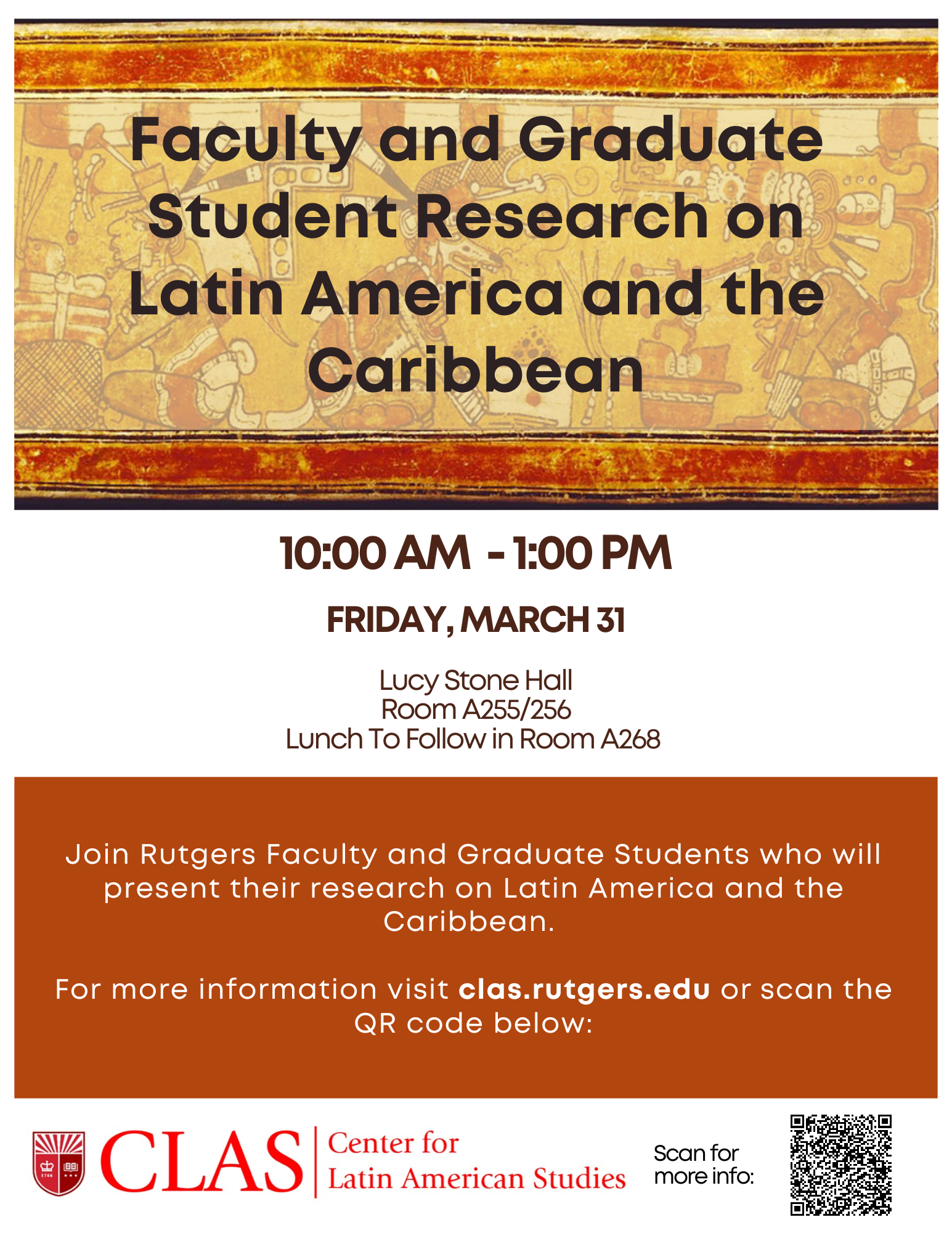
Conference: Faculty and Graduate Student Research on Latin America and the Caribbean
February 17, 2023
On Friday, March 31, 10 pm-1 pm, CLAS Faculty and Graduate Students will participate in a research Conference.
The event will include funded graduate students from the last two cycles of funding!
Will be held at Lucy Stone Hall, rooms A255/256
Lunch to follow in room A268!